
The Listing Appointment Playbook: How Top Agents Get Hired Every Time
The listing appointment is the highest-leverage hour in your real estate business. Zillow research found that 59 percent of sellers only ever contact one agent, which means the first agent in the door is often the only agent in the door. If you walk in unprepared, you are not losing to a competitor. You are losing to yourself. This playbook walks you through exactly how top producers prepare, present, and close the listing appointment, so you get hired more often, at better terms, and with less price resistance. By the end, you will have a repeatable system you can run on every appointment, starting this week.
Why the Listing Appointment Is Your Highest-Leverage Hour
Think about your business for a second. A buyer transaction can take months of showings, calls, and negotiations for one commission. A listing takes one appointment, one pricing conversation, and one marketing plan, and it produces a contract, a transaction, and a referral stream that keeps paying for years. The listing side of the business is where the leverage lives, and the appointment is where that leverage is won or lost.
Here is what most agents miss: sellers are not interviewing a lineup of agents the way they did a decade ago. According to Zillow research, 59 percent of sellers only ever contact one agent. The appointment is not a competition you enter. It is a single opportunity you either win or give away. That changes everything about how you prepare. You cannot count on a second chance, a tiebreaker round, or a better presentation next week. You get one hour to prove you are the obvious choice, and the agents who treat it that way are the ones who get hired.
The Preparation That Wins the Listing Before You Arrive
The appointment does not start when you knock on the door. It starts days earlier, in the research you do and the story you build. Sellers are doing their homework too. Zillow's 2025 Consumer Housing Trends Report found that 36 percent of sellers found their agent online, up from 15 percent in 2018. Before you ever sit down at their kitchen table, they have already Googled you, read your reviews, and looked at your recent sales. Your online presence is part of the appointment, whether you planned for it or not.
Prepare like the listing depends on it, because it does. Pull the property's history: tax records, prior sales, any past listing that expired or was withdrawn, and why. Run your comparables and build a printed market analysis packet, not just a screen you will scroll through. Drive the neighborhood and note what is actively for sale, what is pending, and what sold in the last 90 days. Know the school boundaries, the commute story, and the local amenities, because sellers will test you with questions about their own neighborhood, and they expect you to know more than they do.
One more preparation move that separates the pros: ask the seller questions before the appointment. A quick call to understand their timeline, their motivation, any repairs they are considering, and what they loved about the home gives you the context to tailor everything you present. The agent who walks in knowing the seller's story looks like the agent who already has the listing.
Lead With the Market, Not the Price
In survey after survey from the National Association of Realtors, knowledge of the local market is the single most important quality sellers look for in an agent, rated very important by more than 9 in 10 sellers. Not marketing. Not personality. Not even price. Market knowledge. That is the thing you must demonstrate in the first ten minutes of the appointment, before you ever talk numbers.
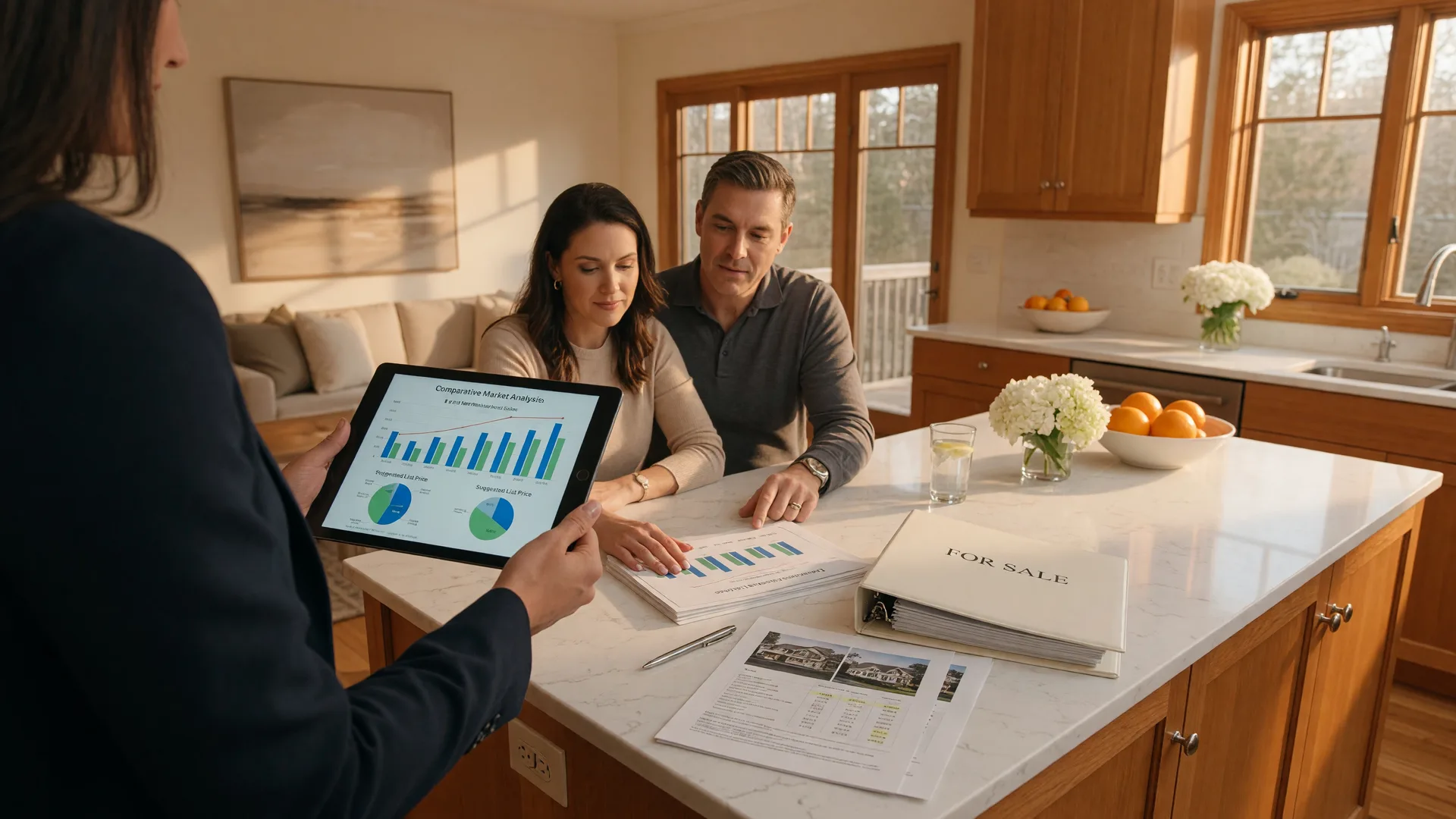
Show the seller the market story: how many homes are for sale in their area, how long the average listing takes to sell, what is actually closing and at what percentage of list price, and how their home compares to the competition. Use your printed packet. Walk them through the three or four comps that matter most and explain why each one is relevant. When you teach the market first, the price stops feeling like your opinion and starts feeling like the market's verdict. That is the foundation of every pricing conversation that ends well.
Then have the honest pricing conversation with three numbers. The first is the range the market supports, based on your comps. The second is the price that actually sells, the number that generates showings and offers in a realistic timeframe. The third is the number you will not go below, the floor that protects their equity and your reputation. Most agents only bring one number and argue for it. Top producers bring the full picture and let the seller see the logic. When a seller understands why the price is what it is, they stop negotiating with you and start preparing to list at the right number.
The Marketing Plan That Makes You Different
Every agent who walks through that door has the same MLS access and the same contracts. The thing that makes you different is the plan you bring. Sellers want to know how their home will be seen, by whom, and how fast. If your marketing plan is a list of generic bullet points, you sound like every other agent they have met.
Make it specific to their home. Professional photography and a video tour that highlights the features you noticed on your walkthrough. Staging advice tailored to the rooms that need it. A digital campaign that targets buyers in the neighborhoods where your comps came from. An open house strategy that treats their listing as a lead capture system, not a social event. And your agent-to-agent network, the other professionals who know your listings and bring their buyers to them first. When you can say exactly what you will do for this home, in this neighborhood, in this market, you stop being interchangeable.
Tie the marketing plan back to the price story. The right price plus the right plan equals a shorter days-on-market and a stronger negotiating position. That connection is what makes sellers feel confident signing with you instead of waiting to hear from someone else. You are not selling them a service. You are selling them an outcome: sold, on time, for the best number the market will support.
The Close: Ask for the Business
Here is the part most agents skip, and it is the most expensive mistake in the business. They present beautifully, answer every question, and then leave without asking for the listing. The appointment is a sales conversation, and sales conversations end with a close. When you have walked the seller through the market, the price, and the plan, look them in the eye and ask: "If you are ready to move forward, I would be honored to represent you. Can we review the listing agreement together?"
If they hesitate, do not retreat into awkward silence. Ask the honest question: "What is holding you back?" Listen to the real answer. If they want to talk to their spouse, offer to come back or to walk them through the agreement with their partner on the phone. If they think the price is too low, revisit the comps and the market story you already taught them. If they are worried about commission, remember that commission is rarely the deciding factor for sellers; they choose the agent they trust. Your job is to find out what the real objection is, address it with confidence, and ask again.
And never leave without a next step. If they are not ready to sign today, get a commitment: a date to follow up, a promise to review your packet tonight, or permission to call them tomorrow. The agents who get hired are the ones who ask. The ones who wait to be chosen usually keep waiting.
What to Do When You Do Not Get the Listing
You will not win every appointment, and that is fine. What matters is what you do next. The listing you did not get today is often the listing you get in 60 days, when the first agent's pricing was too aggressive, the marketing went nowhere, or the seller's timeline changed. Stay in touch on a schedule: a market update at 30 days, a check-in at 60, a call when their listing expires or comes back on the market.
Send a handwritten note after the appointment thanking them for their time, with something useful attached, like a fresh market report or a tip about their neighborhood. You are not chasing them. You are staying valuable. When their first choice does not deliver, and that happens more often than you think, you want to be the agent who already showed up prepared, asked good questions, and treated them with respect. That is the agent they call back.
Your Next Appointment Starts Today
None of this works if it stays an article you read. Turn it into a system before your next appointment. Build your market analysis template so every packet is consistent. Write your three-number pricing framework into a one-page sheet you can fill in for any home. Create a checklist of the questions you will ask every seller on the pre-appointment call. Rehearse your close out loud until it sounds natural, not scripted. And audit your online presence so the seller who Googles you finds reviews, recent sales, and a clear reason to trust you before you ever arrive.
Run the system on your next appointment, then the one after that. Within a few months, you will walk into every listing appointment with the same confidence as the top producers in your market, because you will have the same preparation, the same market story, and the same willingness to ask for the business. The listings are out there. The question is whether you will show up ready to win them.
And if you want to sharpen this skill with a community of agents who are doing the same work, sharing what is working in their markets, and holding each other accountable, that is exactly what The One Stop Collaboration is built for. You do not have to figure this out alone. Bring your next appointment, your questions, and your goals, and let us help you get hired more often.
Ready to Win More Listings?
The One Stop Collaboration offers coaching, strategy sessions, and a community of agents who will help you master the listing appointment and build a business that compounds. Let's talk about what is possible for your career.