The Open House Lead Machine: How One Saturday Fills Your Next Pipeline
Open houses are the most underrated lead generation machine in real estate, and the agents who skip them are handing buyers to the agents who do not. In 2026 buyers search a median of ten weeks before they purchase, and 43 percent of them still call open houses a very useful part of the hunt. One Saturday in the right home, run the right way, can fill your pipeline for a month. This is the complete playbook: the setup, the conversation, and the follow-up system that turns foot traffic into clients.
Why Open Houses Still Matter in 2026
Every so often someone declares the open house dead, and every year the data quietly disagrees. In NAR's 2025 Profile of Home Buyers and Sellers, 43 percent of buyers said open houses were very useful to their search, and 85 percent ranked real estate agents as their single most useful information source. Add the 2026 buyer landscape: buyers are searching longer, comparing more homes, and many of them are walking into open houses without any agent at all. For them, the open house is not a curiosity. It is the first real step of their journey, and the first agent who earns their trust takes the trip with them.
Think about what an open house gives you that no portal, no ad, no follow-up sequence can: face-to-face presence with motivated people, in a home they are actively imagining themselves living in. A buyer who walks through a door you welcomed them through is a buyer who already likes you. That is not a lead source of the past. It is the highest-intent lead source most agents will never use.
Stop Working the Listing. Start Running a Lead Capture System.
A listing appointment has one goal: sell the house. An open house has two: sell the house and collect the name of every person who walks through the door. When you treat the open house as a lead capture system, you stop measuring it by offers on the table and start measuring it by conversations in the book, and that shift changes how you run the whole afternoon.
Know who is actually in the room. Around half your visitors are serious buyers, some in the next six months and some just beginning to look. The other half are curious neighbors: not buyers today, but sellers tomorrow, and the most underrated referral source in the business. The neighbor who walks your open house and loves how you handled it is the same neighbor who tells three friends about you at the next block party. Treat every walk-in like a future client, because that is literally what they are.
The Setup That Pulls People In
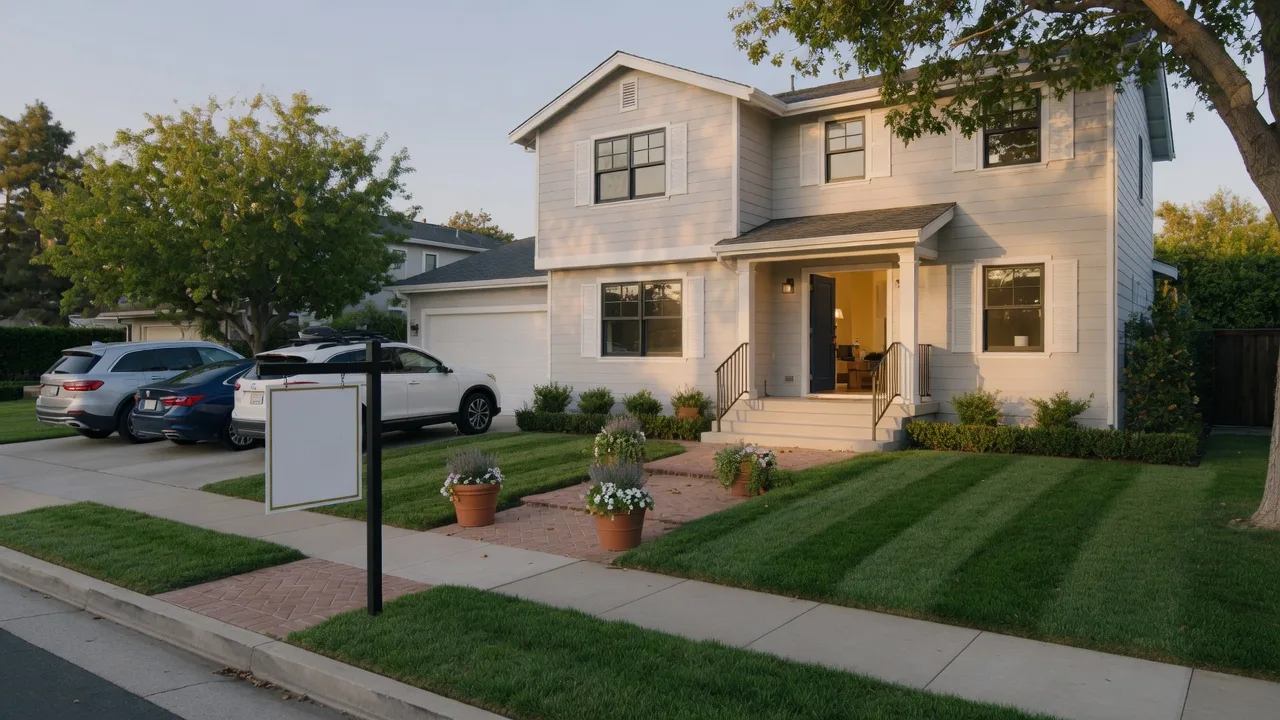
The best open house is not a lucky open house. It is a set-up open house. Start by choosing the right home: a listing in a walkable, active neighborhood where neighbors are curious and buyers are already driving the streets. Then build the pull. Yard sign up, directional signs on the corners, and balloons or flags if the neighborhood allows them. Forty-eight hours before the open house, knock the immediate surrounding streets with a friendly invite and a reason to show up: a market snapshot of the area, a thank-you gift, a chance to see inside a home they have walked past for years. Those neighbors drive the traffic, and they are the future sellers.
Go digital too. Post the open house to your social channels and local groups two days out and again the morning of. Put a QR code at the front door that leads to a simple landing page: leave your name, email, and phone, and instantly receive the neighborhood market report. A buyer who walks in and gives you their info without a word is a gift, so make the exchange worth it and make it effortless. Lights on, curtains open, music low, and if you want the classic scent of a home that feels lived-in, put a tray of fresh cookies in the kitchen. Buyers buy what they can picture themselves in, and your job is to help them picture it.
Finally, never run it alone. Invite a local lender to co-host. They bring their own buyers, they answer the financing questions you would rather not guess at, and you split the work of greeting every single person. A well-run open house is a team sport, and the team makes the afternoon twice as productive.
The Five-Minute Conversation That Changes Everything
The moment someone walks in, you have about five minutes to earn the right to follow up. Greet every single person at the door, smiling, with a notepad in your hand, because the notepad signals that you are working and it gives you a natural place to write their answers. Skip the sales pitch. Ask questions that open the door: What brings you to the neighborhood? Are you looking to move in the next six months, or just getting a feel for the area? What matters most to you in a home?
Then give value before you ask for anything. If they loved the kitchen, tell them about the other homes in the area with great kitchens hitting the market soon. If they mentioned schools, offer the rundown on the district. When you have given them something real, the ask is easy: I want to send you the market report for this neighborhood. What is the best email to reach you? That simple exchange, repeated at the door and again by the sign-in sheet, is how a visitor becomes a contact.
And when a buyer tells you they are not working with an agent, do not let that moment pass. In the post-settlement world, buyers who show up unrepresented often do not realize what a buyer's agent does for them. That is your opening to say it: I would love to walk you through how I work with buyers and what I handle for them. Let us grab coffee this week. The open house is where the buyer representation conversation is won, and the agent who has it first gets the client.
The Follow-Up That Turns Visitors Into Clients
Here is the uncomfortable truth: most agents collect a sign-in sheet and never touch it again. The visitors who would have become clients simply evaporate, and the agent blames the market. You are not going to be that agent. The follow-up is where the open house becomes a pipeline, and it runs on a simple three-step system.
Step one, the same-day text. Within two hours of the open house, send a personal thank you with one useful piece of information: the market report you promised, the details on a home they loved, a note about a new listing you heard about. Short, human, and valuable. Step two, the 48-hour call. Call everyone who seemed genuinely interested and offer one concrete next step: a private showing, a coffee to talk neighborhoods, a custom list of homes that match what they described. Step three, the 90-day nurture. Every week, one touch of real value: a new listing that fits, a market update for their target area, an invite to your next event. Keep showing up with something useful and you will be the only agent in their phone who does.
Buyers do not buy the week they walk your open house. They buy an average of weeks later, after seeing a dozen homes, after their questions pile up, after they get tired of agents who disappear. The agent who followed up on a Tuesday afternoon is the agent who gets the call on a Thursday night. Consistency is the whole game.
Track the Numbers That Matter
Open house math is simple, and it is honest. Fifteen visitors becomes ten real conversations, becomes five showings or consultations, becomes two clients, plus the seller referral from the curious neighbor who liked how you treated them. Your ratios will start lower and get better every time you run the system, but only if you track them. Count visitors, count conversations, count follow-ups completed, count showings booked. That scoreboard is what turns a hobby open house into a lead machine.
One open house a month is a start. One open house a week is a business. The agents who win do not wait for the perfect listing or the perfect weekend. They run the system, they follow up like it matters, and they let the numbers climb.
Your 30-Day Open House Plan
Week one: commit to two open houses in the next 30 days and put them on the calendar today. Build your QR landing page and your neighborhood market one-pager. Week two: line up your lender co-host and do the 48-hour neighborhood knock, personally inviting the streets around the home. Week three: run open house number one with the full system, and complete every same-day and 48-hour follow-up before the week ends. Week four: run open house number two, review your scoreboard, and book the listings for next month. Thirty days from now you will know exactly what this machine can do for your business, because you will have done it instead of reading about it.
Your Move
The Saturday you spend catching up on laundry is the same Saturday another agent is meeting twenty buyers face to face. Open houses have never stopped working. Agents just stopped running them with a system, and systems are the one thing this business has always rewarded. Buyers search for ten weeks, they rate you as their most useful source, and they are walking through doors right now, in your town, in your market, waiting for the agent who will actually follow up.
Be that agent. Show up, run the conversation, work the follow-up, and watch one Saturday turn into your next pipeline. You do not need a bigger budget or a better market. You need the discipline to run the system and people around you who will hold you to it.
Grow Your Career With a Community That Has Your Back
The One Stop Collaboration hosts events, masterminds, and high-energy training built for agents who are done guessing and ready to grow. Bring your open house playbook into a room of people who will challenge you, encourage you, and push you to make it real.